Businessweek | Modern Management
Co-CEOs on the Secret to Making It Work
Two-leader arrangements have a reputation for sometimes ending badly, but not for these teamed-up executives.
By Heather Landy
June 16, 2026
When Mellody Hobson was named co-chief executive officer of Ariel Investments LLC in 2019, her husband, George Lucas, warned her that having two leaders at the top has never worked out, at least not in his universe. Call it the Sith Rule of Two.
According to Star Wars lore — and he’d know; he invented it — devotees of the dark side of the Force are typically led by a pair of lords of unequal status, a teacher and an apprentice. It’s always a tense relationship, with the more senior leader inclined to switch sidekicks if a more promising pupil appears and the more junior facing scant chance of promotion so long as the boss is alive.
“Obviously, John is not a Sith Lord,” Hobson says, laughing, when describing her co-CEO and the firm’s founder, John Rogers Jr. But she knew going into a shared leadership role with her mentor and boss of 28 years wasn’t without risk.
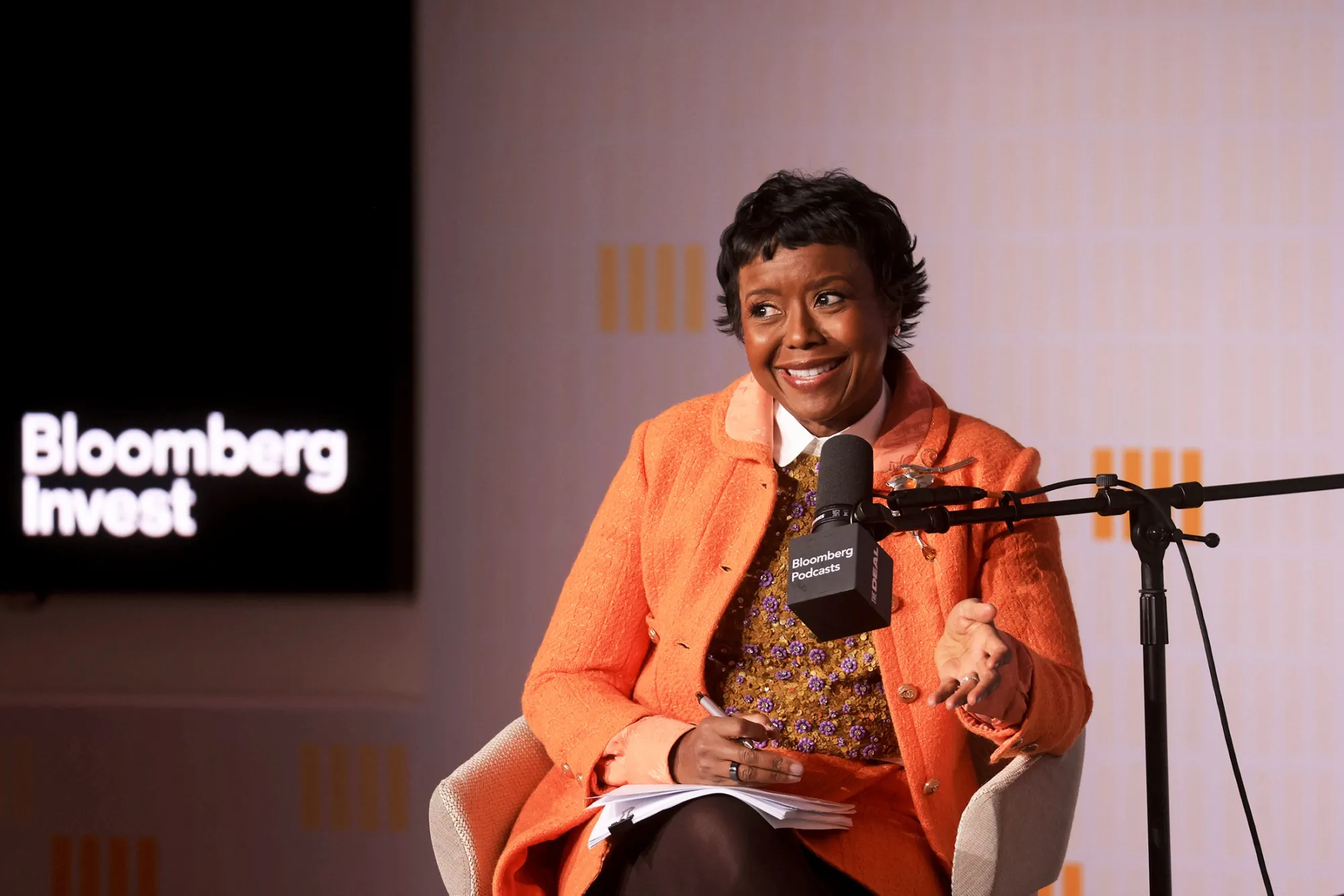
Mellody Hobson, co-CEO of Ariel Investments.Photographer: Michael Nagle/Bloomberg via Getty Images
Co-CEO arrangements are historically rare and famously fraught, undone as easily by clashes of egos or leadership styles as by disagreements over company strategy. This management model — tried and abandoned over the years by Chipotle, Citigroup, Salesforce and SAP, among others — has been alternately critiqued as a backdoor attempt at talent retention, a halfway measure for handing power to women and a recipe for confusion over who’s in charge of what.
So is it ever logical to have more than one executive in the top role? And how do successful co-leaders make the relationship work? These are suddenly burning questions in an increasing number of boardrooms, spurred by the ever-widening responsibilities of CEOs managing through major shifts in technology and geopolitics and evolving societal expectations of corporate bosses. Now, a growing cohort of companies, including Comcast, Netflix, Oracle, Spotify and Swiss running-shoe company On, are giving the co-leadership model a go.
Reasons for the recent wave of power sharing vary. For Oracle Corp. the move was seen as a way to balance its bet on Clay Magouyrk, who was 39 when he was appointed and known for his maverick style running the company’s fast-growing cloud business. He was paired with a more experienced executive 15 years his senior, company veteran Mike Sicilia. Spotify Technology SA split the top job when its founding CEO stepped aside in January. (Filling the big shoes of a founder is a common reason companies turn to co-CEOs.) At other businesses, co-leadership is the manifestation of a culture built on collaboration, or simply a way of covering more territory.
From pairs who’ve managed to make it work, here are some of the best tips for sharing the C-suite successfully.
1. Play to Your Strengths …
The co-CEOs of Gensler — the global architecture and design firm behind marquee projects including new headquarters for Walmart Inc. and Nvidia Corp., plus China’s tallest building, Shanghai Tower — spent decades on parallel professional tracks before they were promoted together to the top role in 2024. From her base in Los Angeles, Elizabeth Brink came up through Gensler’s planning and strategy track, as Jordan Goldstein stuck close to architectural work while developing an interest in digital technology from the Washington, DC, office. Their career paths united when they replaced another male-female duo that had helmed the firm for almost 20 years.
Given their different routes to the top, Goldstein takes the lead on technology and design innovation, plus practice areas including sports and aviation, while Brink runs point on areas such as talent development, research, and the firm’s workplace and healthcare practices. “We started to identify the areas where we each have a lot of passion so that we can cover a little bit more ground,” Brink says.
2. … But Stand United
Despite their division of labor, Brink and Goldstein co-lead the firm’s global operations, and every Monday they co-host a firmwide call often lasting two to three hours. When they make a decision, “we always co-own it,” Goldstein says. “If there’s disagreement, we keep it within the room and then go out with one voice.”
Disputes are rare, Brink says, but when they do arise they require each person to explicitly state what’s making them wary. By addressing those concerns, the pair can reach a consensus. They don’t both need to love the decision. But “in the end, we both have to feel comfortable with it because we’re co-owning it,” she says.
3. Write It Down
Having a system for settling debates is a common trait of successful CEO pairings. At Ariel, Hobson and Rogers went so far as to put it in writing. “We sat with a board member, and we literally wrote out rules of engagement,” Hobson says, so “we would be extremely clear about our responsibilities and where we had decision rights.”
Making those determinations ahead of time was one way of ensuring the duo didn’t just default to dynamics in which Rogers, who hired Hobson after she interned at Ariel and finished college, made all the big calls. “I’m confident in my point of view and how I think about the world and what I think is right for the firm,” Hobson says, “but I do have reverence for what he envisioned and started from scratch, and I never forget that.”

John Rogers Jr., co-CEO of Ariel Investments.Source: Ariel Investments
4. Be Equals, Really
Given their past as mentor-mentee, Hobson wanted the co-CEO role only if she, Rogers and the board all thought of her as an equal. “I think both internally and externally people just assumed I was making all these decisions — and in effect, Mellody was making a lot of decisions and leading many aspects of our business,” Rogers says. “Even though Mellody and I understood what was going on, I thought it was important, and we agreed that we wanted to make sure this was clear to the rest of the world.”
Their ownership split offered another signal. When her promotion went into effect, Hobson held a 39.6% stake in Ariel, to Rogers’ 34.2%.
5. Split Direct Reports
At Nordstrom Inc., co-CEOs Pete and Erik Nordstrom, who are great-grandsons of founder John W. Nordstrom, have a mostly fluid approach to managing the business. Although the former came up through merchandising and the latter mainly in store operations, they’re comfortable wading into each other’s territory when necessary. (“I was a fine shoe buyer in my day — I’ve got opinions” about merchandising, Erik quips.) But they draw the line when it comes to managing people.
Each has his own set of direct reports, with the executive team roughly split between the two. “We think that’s important,” Erik says. “People need to hear from one clear voice how they’re performing and what their standing in the company is.” Research backs up their thinking. While matrixed reporting lines aren’t uncommon, they can lead to misalignment in goals, ambiguousness in authority and confusion for employees.
6. Get to Know Each Other
Unlike KKR & Co.’s Joe Bae and Scott Nuttall, who worked closely at the investment firm and even vacationed together with their families before they were named co-CEOs five years ago, Gensler’s Brink and Goldstein hadn’t worked directly together when they took the reins.
Weeks into their role, they were visiting Gensler’s office in Paris when their mobile service went dark during a major outage. “It was night. We couldn’t reach anybody,” Goldstein says. So instead of retiring to their hotel rooms to call colleagues or family as they normally would, the two sat in the courtyard and, over a bottle of wine, talked about their hopes for the firm. They emerged from the discussion with a shared vision that both say continues to guide them.
7. Fight for What Works
As brothers, Pete and Erik Nordstrom were already plenty familiar when they became co-heads of the department-store chain alongside their brother, Blake, in 2015. Still, the board would question the arrangement every few years and look into whether it was creating confusion internally. Although the model was unusual for a publicly traded retailer, the skepticism “always felt like it was a bit more of an academic pursuit than grounded in the best thing for the company,” Pete says.
In 2020, a year after Blake died of lymphoma at age 58, the two younger brothers finally capitulated to the board. “We decided, well, fine, you can call us whatever you want, but we want to be paid the same” and would continue to manage the business as a team, Pete says. Erik became sole CEO, and Pete was named president and chief brand officer.
When the company returned to private ownership last year after more than 50 years as a public company, one of the first things the Nordstroms did was name themselves co-CEOs.
Posted from Bloomberg.com, June 16, 2026, copyright by Bloomberg L.P. with all rights reserved.
This reprint implies no endorsement, either tacit or expressed, of any company, product, service or investment opportunity.
#C153333 Managed by The YGS Group, 800.290.5460. For more information visit www.YGSContentLicensing.com.